
Condition overview

What is urethral stricture?
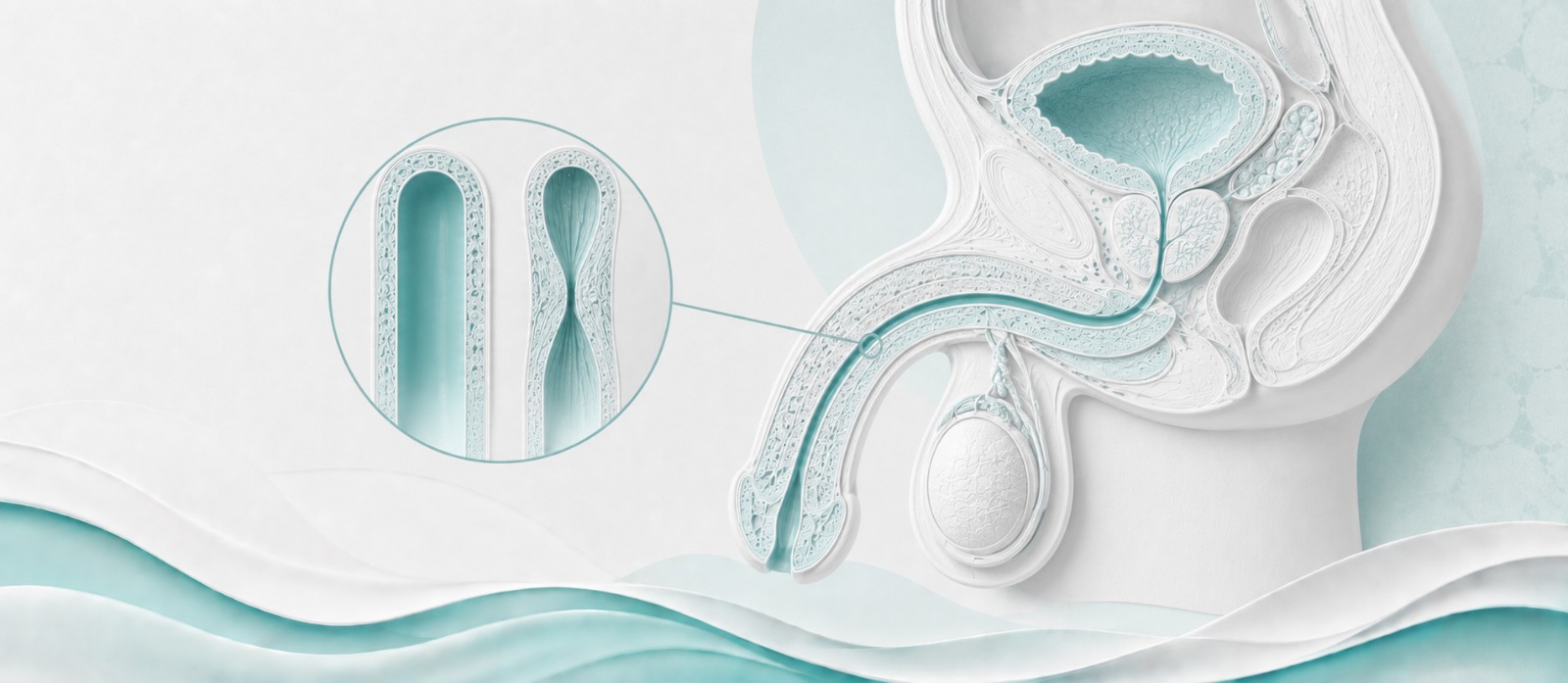
A urethral stricture is a narrowing of the urethra, the urine passage that carries urine from the bladder out of the body.
When scar tissue narrows this passage, urine flow can become weak, thin, split, or difficult to start. Many patients notice they take longer to pass urine, need to strain, or still feel urine is left inside the bladder.
Urethral stricture treatment should not be planned only from symptoms. The key step is to find the exact location, length, and severity of the narrowing.
A short first-time bulbar urethral stricture may be managed differently from a long, dense, recurrent, penile, post-injury, or post-surgery stricture.
The bottom line: weak urine flow is not always prostate enlargement or infection. In men with catheter history, trauma, previous endoscopic procedure, urethral infection, or repeated dilation, urethral stricture should be considered. If you cannot pass urine at all, seek urgent care.
Urethral stricture symptoms
Common urethral stricture symptoms include weak urine flow, spraying or split urine stream, straining, hesitancy, slow urination, incomplete emptying, dribbling, burning, recurrent UTI, blood in urine, and lower abdominal discomfort.
Some patients develop repeated infections because urine does not drain properly. Others may suddenly go into urinary retention, where they cannot pass urine.
Causes and risk factors
A urethral stricture may happen after catheter use, urethral instrumentation, cystoscopy, prostate or urinary surgery, pelvic injury, straddle injury, infection, inflammation, lichen sclerosus, or previous failed stricture treatment.
The cause matters because it affects treatment planning. A bulbar stricture, penile stricture, post-injury stricture, and recurrent stricture after OIU may need different approaches.
When to consult a urologist
Consult a urologist if your urine stream is weak, getting thinner, spraying, stopping and starting, or if you need to strain to pass urine.
You should also get checked if urinary infections keep returning, catheter insertion was difficult, or symptoms came back after dilation or optical internal urethrotomy.
Diagnosis and tests
Diagnosis may include uroflowmetry, post-void residual urine check, urine routine and culture, ultrasound, cystoscopy, retrograde urethrogram or RGU test, and VCUG when needed.
RGU and cystoscopy help map the narrowing. Treatment is planned after understanding stricture length, location, density, previous treatment, infection, bladder emptying, and recurrence risk.
When to consult
Could weak urine flow be due to urethral stricture?
What is your main symptom?
This checklist helps organize symptoms and reports. It does not replace a urology consultation, especially if urine flow is worsening or retention has occurred.
Treatment options
Treatment options for urethral stricture
Urethral stricture treatment depends on stricture length, location, severity, previous procedures, recurrence, infection, bladder emptying, and patient health. There is no single treatment for every patient.
Treatment without surgery may be possible only in selected situations, such as mild symptoms, short narrowing, temporary catheter drainage, infection control, or observation when risk is low. Medicines may treat UTI or inflammation, but medicines usually do not remove established scar narrowing in the urethra.
Dilation or optical internal urethrotomy may help selected short strictures, especially first-time short bulbar strictures. However, repeated dilation or repeated OIU may give temporary relief and can be associated with recurrence.
Urethroplasty is reconstructive urethral stricture surgery used for longer, dense, recurrent, or complex strictures. The goal is durable urine flow, fewer repeat procedures, and long-term follow-up.
Book consultation for weak urine flow
Patients searching for the urologist in Gurgaon for weak urine flow, spraying, recurrent UTI, urinary blockage, or recurrent urethral stricture can consult Dr Vikram Barua Kaushik at Urowellness Clinic. Urowellness Clinic is a urology clinic in Gurgaon where Dr Vikram Urologist, a urologist and robotic surgeon, reviews symptoms, uroflowmetry, RGU test, cystoscopy reports, previous dilation or OIU history, and recurrence risk before planning treatment. If your urine stream is becoming weak, symptoms are returning after a previous procedure, or you want to understand whether urethral stricture treatment without surgery is possible, book a consultation for a clear next-step plan.

"A good stricture plan should focus on durable urine flow, not only temporary relief."
Dr. Vikram · Urologist, Robotic SurgeonRecovery and follow-up
Before, during, and after stricture care
Good urethral stricture care starts with correct mapping and continues with catheter care, follow-up urine flow checks, and early review if symptoms return.
- Bring uroflowmetry, ultrasound, RGU, cystoscopy, urine culture, and previous operation notes
- Share catheter, injury, infection, prostate surgery, or past urethral procedure history
- Tell the doctor if retention happened or catheter insertion was difficult
- Ask whether the stricture is short, long, bulbar, penile, posterior, or recurrent
- Understand whether dilation, OIU, observation, catheter care, or urethroplasty is being considered
- Discuss expected catheter duration, hospital stay, and recovery time

FAQs
Frequently asked questions
Urethral stricture is narrowing of the urine passage, usually due to scar tissue. Common symptoms include weak urine flow, spraying or split stream, straining, slow urination, incomplete emptying, dribbling, burning, repeated UTI, blood in urine, and sometimes sudden inability to pass urine.
Common causes include catheter use, urethral instrumentation, cystoscopy, prostate or urinary surgery, pelvic or straddle injury, infection, inflammation, lichen sclerosus, or previous failed stricture treatment. Sometimes no clear cause is found.
Some mild or selected short strictures may be managed with observation, catheter drainage, infection treatment, or dilation. Medicines may treat UTI, burning, pain, or inflammation, but they usually cannot remove established scar narrowing in the urethra.
The treatment depends on stricture length, location, severity, and recurrence. Short first-time strictures may be considered for dilation or OIU in selected cases. Longer, dense, or recurrent strictures may need urethroplasty, which may offer a more durable repair than repeated dilation.
Dilation stretches the narrowed area. OIU, or optical internal urethrotomy, cuts the scar from inside using an endoscopic approach. Urethroplasty is reconstructive surgery to repair or rebuild the narrowed urethra. The right option depends on the stricture type and recurrence risk.
Diagnosis may include uroflowmetry, post-void residual urine check, urine test, ultrasound, RGU test, VCUG, and cystoscopy. RGU helps show the location and length of narrowing, while cystoscopy lets the urologist see the narrowing directly from inside the urethra.
Yes. Recurrence can happen after any treatment, though the risk varies. Recurrent stricture depends on length, location, scar density, infection, previous procedures, and treatment type. If symptoms return, the stricture should be mapped again before repeating treatment.
Bulbar urethral stricture is narrowing in the bulbar part of the male urethra. It is one of the common stricture locations. A short first-time bulbar stricture may be treated differently from a long, dense, penile, posterior, post-injury, or recurrent stricture.
Recovery depends on the procedure. Dilation or OIU may have a shorter recovery, while urethroplasty usually needs more planned healing time. Many stricture procedures require a catheter while the urethra heals. Catheter duration depends on the treatment performed.
Urgent care is needed if you cannot pass urine, have fever with urinary blockage, severe lower abdominal pain, or a blocked catheter. Severe or long-term blockage can affect the bladder and, in some cases, the kidneys.