
The bottom line: overactive bladder (OAB) is a pattern of sudden, hard-to-control urges to urinate, often paired with frequency and getting up at night, caused by the bladder muscle contracting before the bladder's actually full. In men, it frequently overlaps with an enlarged prostate but isn't the same condition, and treating only the prostate doesn't always resolve OAB symptoms. Management usually starts with bladder training and lifestyle changes, then medication such as anticholinergics or beta-3 agonists if needed, with nerve stimulation or Botox reserved for symptoms that don't respond to simpler treatment.
What Is Overactive Bladder?
Overactive bladder is a set of urinary symptoms, not a single diagnosis with one cause. It happens when the detrusor muscle, the muscle that makes up the bladder wall, contracts involuntarily even when the bladder isn't full, producing a sudden, strong urge to urinate that can be hard to delay.
It's common, becomes more frequent with age, and affects both men and women, though the underlying reasons and treatment considerations differ somewhat between the sexes, particularly because of the prostate's role in male urinary symptoms.
Symptoms of Overactive Bladder
The core feature is urgency: a sudden, compelling need to urinate that's hard to postpone. But OAB usually shows up as a cluster of related symptoms rather than urgency on its own.
- Urgency: a sudden, strong need to urinate that's hard to delay
- Frequency: urinating more than eight times in 24 hours
- Nocturia: waking two or more times a night specifically to urinate
- Urge incontinence: leaking urine before reaching the bathroom, in some but not all cases
- A sense that the bladder empties normally between episodes, unlike the incomplete-emptying feeling that's more typical of prostate obstruction
Common Causes and Triggers
In many men, no single clear cause turns up. OAB is generally considered a functional problem of bladder muscle behaviour rather than a structural blockage. Where an underlying cause or contributing factor is identified, it's often one of these.
- Ageing-related changes in bladder muscle and nerve signalling
- Enlarged prostate causing secondary bladder muscle changes over time, even when the prostate itself isn't currently obstructing flow
- Neurological conditions such as stroke, Parkinson's disease, or spinal cord issues affecting bladder nerve control
- Diabetes, particularly when poorly controlled, affecting bladder nerve function
- Excess caffeine or alcohol intake, both of which irritate the bladder and increase urine production
- Certain medicines, including some blood pressure and diuretic medications
- Chronic constipation, which can place pressure on the bladder
- Urinary tract infection, which can mimic OAB symptoms and should always be ruled out first
Overactive Bladder vs Enlarged Prostate
This is where a lot of confusion happens in clinic, because the two conditions share several symptoms (frequency, urgency, getting up at night) and frequently occur together in the same patient.
The distinguishing symptoms tend to be these: enlarged prostate more typically causes a weak or slow stream, straining to start urination, and a feeling of incomplete emptying, what doctors call obstructive symptoms. OAB is more centred on urgency and frequency without a stream problem, storage symptoms. Read more about prostate problems and their treatment if a weak stream or straining is also part of your picture. Many men have a genuine mix of both, prostate enlargement causing secondary bladder overactivity, which is exactly why treating only one side of the problem sometimes leaves symptoms only partly improved. That's why the two need to be assessed together rather than assumed to be the same thing.
How Overactive Bladder Is Diagnosed
Diagnosis starts by ruling out other causes of similar symptoms, particularly urinary infection (checked with a simple urine test) and prostate enlargement (assessed through symptom pattern, examination, and sometimes uroflowmetry and ultrasound for residual urine).
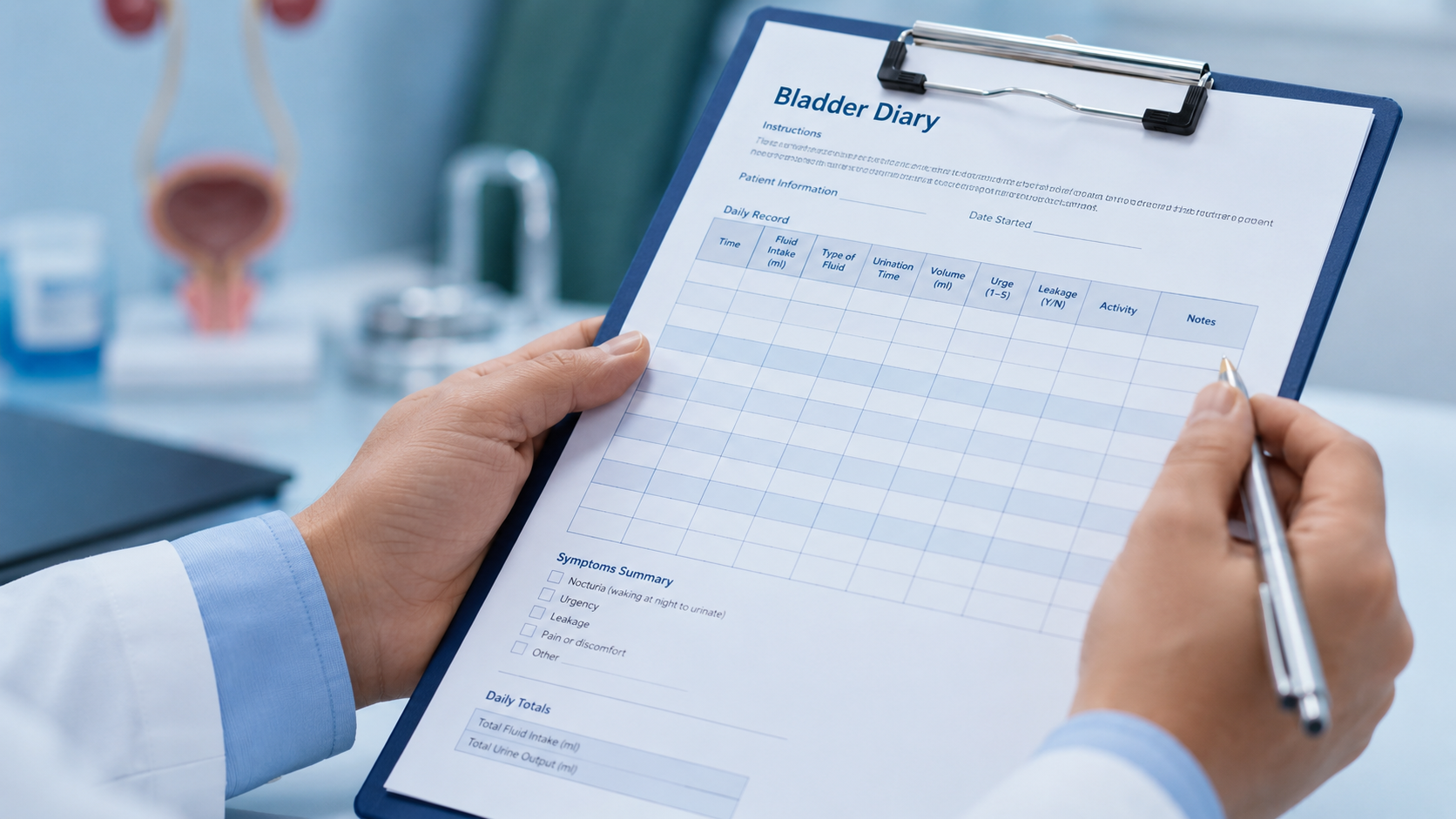
A bladder diary, recording how often you urinate, how much, and any leakage or urgency episodes over two to three days, is one of the most useful tools here, and it's something your urologist will often ask you to fill out before or after the first visit. In select cases where the diagnosis is unclear or initial treatment hasn't worked, more detailed bladder function testing, called urodynamic studies, may be advised.
Treatment Options
Treatment usually follows a step-up approach: start with the least invasive options and move to more involved treatment only if needed.
Bladder training is typically the starting point: gradually increasing the interval between bathroom visits and practising urge-suppression techniques. It genuinely works for a meaningful number of men, though it takes patience, usually six to eight weeks before you notice a clear improvement. If symptoms persist, medication is commonly added, most often anticholinergic drugs, which reduce involuntary bladder contractions, or beta-3 agonists, a newer medicine class with a different side-effect profile that some men tolerate better. Where an enlarged prostate is contributing, prostate-specific medication is sometimes combined with bladder medication rather than used alone. For OAB that doesn't respond adequately to bladder training and medication, options include Botox injections into the bladder muscle or sacral nerve stimulation, both reserved for more persistent, harder-to-manage cases rather than being first-line treatment.
Lifestyle Changes That Genuinely Help
Alongside formal treatment, a few practical changes make a real difference for many men, and they're worth trying regardless of what else is prescribed.
- Cutting back on caffeine and alcohol. Both are bladder irritants and mild diuretics
- Spacing fluid intake through the day rather than drinking large amounts at once, particularly in the evening
- Managing constipation, since a full bowel can press on and irritate the bladder
- Maintaining a healthy weight. Excess weight increases pressure on the bladder
- Pelvic floor exercises, which support bladder control alongside bladder training
- Reviewing current medicines with your doctor, since some blood pressure or diuretic medicines can worsen frequency and urgency
When to Consult a Urologist
Consult a urologist if urgency or frequency is affecting your daily routine, work, or sleep, if you're leaking urine before reaching the bathroom, if symptoms have developed alongside a weak stream or straining, or if bladder training on your own hasn't made a meaningful difference after a few weeks.
If you're searching for the urologist in Gurgaon for urinary urgency, frequent urination, or overactive bladder, Dr Vikram Barua Kaushik at Urowellness Clinic is available for consultation.
Urowellness Clinic is a urology clinic in Gurgaon where Dr Vikram Urologist, a urologist and robotic surgeon, reviews bladder diaries, prostate status, and underlying causes before recommending a treatment plan that fits your actual symptom pattern rather than a one-size-fits-all prescription.
If bladder urgency or frequent trips to the bathroom are affecting your life, it's worth booking a consultation for a proper bladder evaluation.
The Takeaway
Overactive bladder is a genuine, treatable medical condition, not just something to accept as part of getting older. In men it often overlaps with prostate enlargement, but the two are assessed and treated somewhat differently. Getting that distinction right, or recognising when both are present together, makes a real difference to how well treatment works.
Most men improve with a step-up approach: bladder training first, then medication if needed, with more advanced options reserved for symptoms that don't respond to simpler treatment. Ruling out infection and prostate involvement early keeps the plan focused on what's actually driving the symptoms.
Resources
- Overactive Bladder (OAB): Causes, Symptoms and TreatmentCleveland Clinic
- The AUA/SUFU Guideline on the Diagnosis and Treatment of Idiopathic Overactive BladderAmerican Urological Association
- Treatment for Urinary IncontinenceWebMD
 FAQs
Frequently asked questions
Overactive bladder mainly causes urgency and frequency, a strong, sudden need to urinate, without necessarily affecting the strength of the stream. Enlarged prostate more typically causes a weak or slow stream, straining, and incomplete emptying. Many men have elements of both together, which is why they're assessed as a combined picture rather than assumed to be one or the other.