
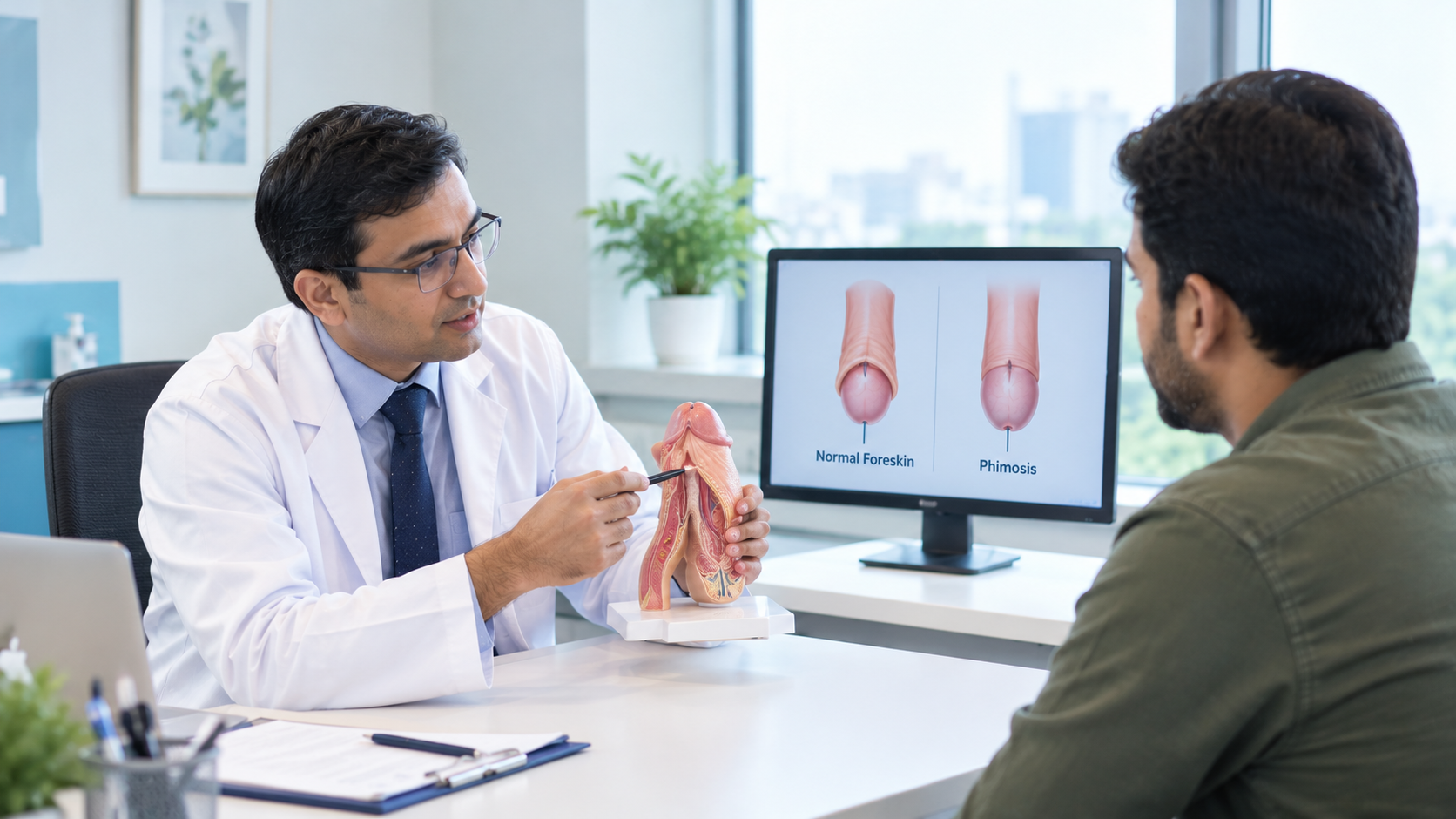
Phimosis is a condition in which the foreskin cannot be retracted comfortably over the head of the penis. Although a tight foreskin is normal in young children, new or persistent tightness in adulthood can sometimes be linked to inflammation, infection or scarring. Some adults have no symptoms, while others experience discomfort during urination, erections or sexual activity. Understanding the cause is important because treatment depends on the severity of the tightness and the condition of the foreskin.
What Is Phimosis?
The foreskin is the fold of skin that covers the glans, or head, of the penis. Phimosis describes a situation in which this skin is too tight to retract comfortably. In adults, it may have been present for a long time or may develop after previously being able to retract the foreskin.
Not every tight foreskin needs treatment. If it causes no discomfort or hygiene problems, a clinician may recommend observation. Pain, inflammation, difficulty urinating or problems during sexual activity should be assessed rather than ignored.
Symptoms of Phimosis in Adults
Symptoms vary depending on the degree of tightness and whether inflammation or scarring is present. Common signs include difficulty pulling the foreskin back, tightness or pain during an erection, discomfort during sexual activity, redness or swelling around the foreskin, and small cracks or bleeding after attempted retraction.
Some people notice pain or difficulty while urinating, recurrent inflammation, discharge or an unpleasant smell beneath the foreskin. These symptoms can have several causes, so an examination is needed to determine whether phimosis, infection or another condition is responsible.
If the foreskin has been pulled back behind the head of the penis and becomes stuck there, causing swelling or pain, seek emergency medical care. This condition is called paraphimosis and requires urgent treatment.
What Causes Phimosis in Adults?
Adult phimosis can result from repeated inflammation, infection, irritation or scarring of the foreskin. Conditions affecting the skin, including lichen sclerosus, can cause the tissue to become less flexible and increasingly difficult to retract.
Repeated tearing from forceful retraction can lead to further scarring and worsen tightness. Diabetes may be associated with a higher risk of certain genital infections, which can contribute to inflammation in some people.
The cause is not always obvious. A clinician can examine the skin, ask about symptoms and medical history, and decide whether further assessment or tests are needed.
How Is Phimosis Diagnosed?
Diagnosis usually involves discussing symptoms and examining the foreskin and head of the penis. The clinician will assess how much the foreskin can move, whether inflammation or scarring is present, and whether there are signs of infection or another skin condition.
If there is discharge or suspected infection, additional testing may sometimes be appropriate. If symptoms suggest an underlying medical condition, the clinician may recommend further investigations. Treatment should be based on the findings rather than on tightness alone.
Phimosis Treatment Options
Treatment depends on the cause, severity and symptoms. Some adults with mild or symptom-free phimosis may not need an active treatment plan beyond appropriate hygiene and clinical follow-up when advised.
A clinician may prescribe a topical corticosteroid cream or gel for selected cases. These medicines can help soften the tight tissue, particularly when scarring is limited. Use the prescribed product exactly as directed, as inappropriate or prolonged use can cause side effects.
If infection or inflammation is identified, treatment may include the appropriate medicine and measures to avoid further irritation. Antibiotics are only appropriate when a bacterial infection is suspected or confirmed and should be prescribed by a healthcare professional.
When significant scarring is present, symptoms persist or medical treatment is unsuccessful, a surgical option may be considered. Circumcision removes the foreskin and may be recommended in selected cases. Other procedures may be suitable for particular patients, depending on the cause and extent of the tightness.
Each treatment has potential benefits and risks. A urologist can explain expected recovery, possible complications and whether a foreskin-preserving approach is suitable for your situation.
What You Should Avoid at Home
Do not force the foreskin backward to try to make it looser. Forceful stretching can cause small tears, bleeding and additional scar formation, potentially making the problem worse.
Wash gently with warm water and avoid perfumed soaps, deodorants or other products that irritate sensitive skin. Retract the foreskin only as far as is comfortable and always return it to its normal position over the head of the penis after cleaning.
Do not use steroid creams, antibiotics or other medicines without medical guidance. The correct treatment depends on whether the tightness is caused by simple narrowing, inflammation, infection or a scarring skin condition.
Can Phimosis Affect Sexual Activity?
Phimosis can cause discomfort during erections or sexual intercourse when the foreskin is pulled tight. The degree of discomfort varies, and some adults experience no sexual symptoms at all.
If sexual activity is painful, avoid forcing the foreskin to retract and arrange a medical assessment. A clinician can help identify the cause and discuss appropriate treatment. Do not continue an activity that causes tearing, bleeding or significant pain.
When Should You See a Urologist?
Arrange a consultation if the foreskin becomes increasingly tight, painful, swollen or difficult to clean, or if you experience painful erections, recurrent inflammation, bleeding, discharge or difficulty urinating.
Seek emergency medical attention if the foreskin is stuck behind the head of the penis and cannot be brought forward again, particularly if swelling or pain is developing. This may be paraphimosis, which can restrict blood flow and needs urgent treatment.
Early assessment can help identify the underlying cause and reduce the risk of repeated injury or complications. There is no need to feel embarrassed about discussing foreskin symptoms with a qualified healthcare professional.
Resources
- Tight Foreskin (Phimosis)National Health Service (NHS)
- Tight Foreskin (Phimosis)Leeds Teaching Hospitals NHS Trust
 FAQs
Frequently asked questions
A tight foreskin can occur in adults, but persistent or newly developed tightness may be associated with inflammation, infection or scarring. If it causes pain, bleeding, difficulty urinating or problems during sexual activity, arrange a medical assessment.