
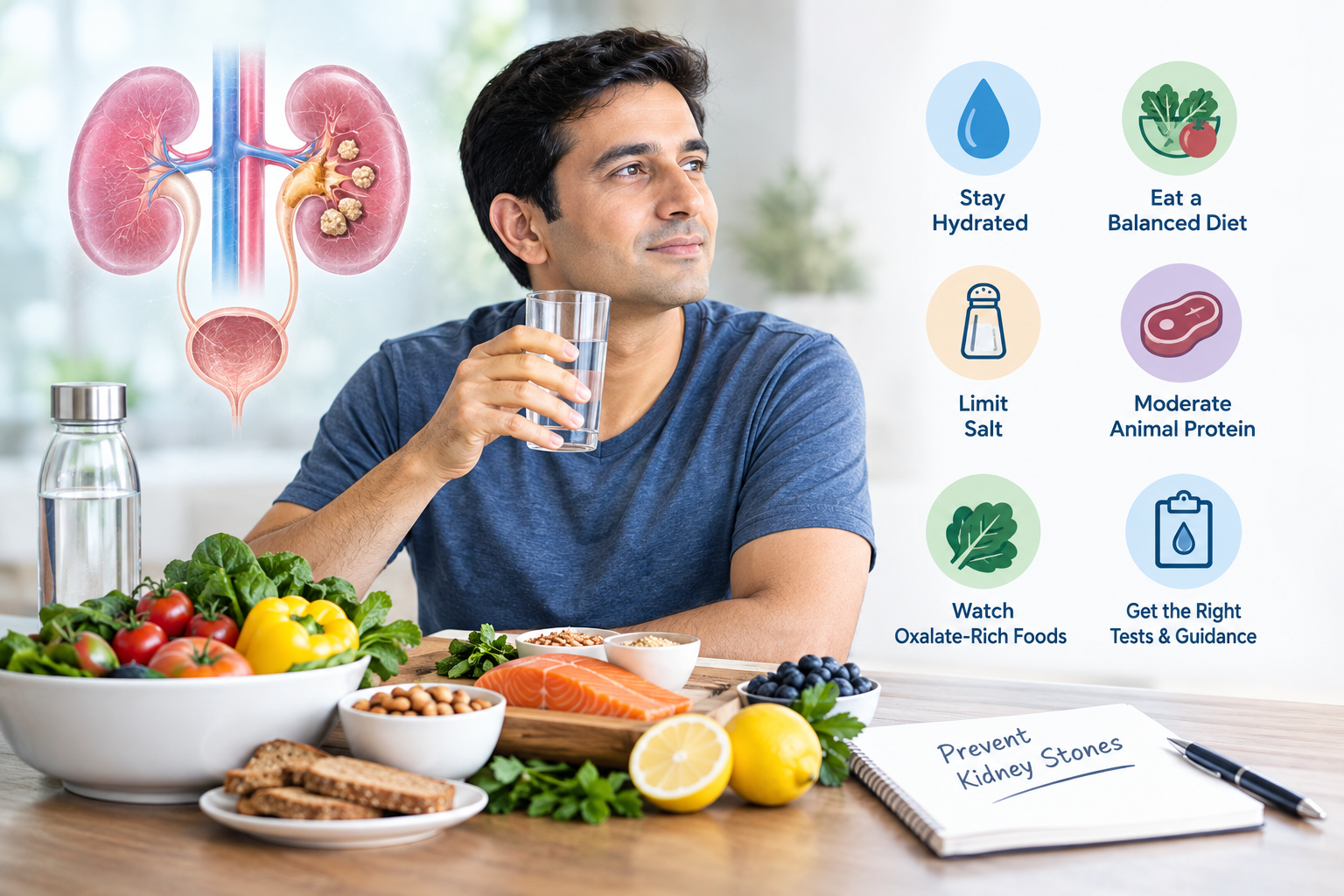
Passing a kidney stone can be painful enough. The next concern is often whether another one will form. The good news is that recurrence risk can often be reduced, but prevention is not the same for everyone. The most important step is maintaining enough fluid intake to keep urine dilute. Diet also matters, particularly the amount of salt, animal protein, calcium and oxalate in your diet. If you have already formed a stone, knowing what type of stone it was can make prevention much more specific. For people with recurrent stones or a higher risk of recurrence, a urologist may also recommend stone analysis and a 24-hour urine evaluation to understand exactly what is happening in the urine.
Why Do Kidney Stones Keep Coming Back?
Kidney stones form when certain substances in the urine become concentrated enough to form crystals. These crystals can gradually grow into stones.
Having one kidney stone can increase the chance of forming another, particularly when the underlying reason for the first stone is not addressed. Low urine volume, high urinary calcium, high oxalate, high uric acid, low citrate, high sodium intake and certain medical conditions can all contribute.
The important point is that prevention should focus on why your stones are forming rather than simply following a generic kidney stone diet.
The Most Important Step: Drink Enough Fluid
For most people who form kidney stones, drinking enough fluid is the single most important lifestyle change. More fluid means more dilute urine, which makes it harder for stone-forming minerals to become concentrated.
There is no single number of glasses that is right for everyone. Your fluid requirement changes with body size, weather, physical activity, sweating, diet and other health conditions.
For people at risk of recurrent stones, doctors may use urine output as a more useful target. Guidelines commonly recommend aiming for at least about 2.5 litres of urine over 24 hours, when medically appropriate.
If you work or exercise in hot weather, you may need considerably more fluid because you lose water through sweat. This is particularly relevant in hot climates and during outdoor work or exercise.
Practical Ways to Drink More Fluid
- Keep water available throughout the day instead of waiting until you feel thirsty.
- Drink regularly during work, exercise and travel.
- Increase fluid intake when you are sweating heavily, unless your doctor has restricted fluids.
- Pay attention to very concentrated urine, which can be a sign that you are not drinking enough.
- If you have kidney failure, heart failure or another condition requiring fluid restriction, ask your doctor how much you should drink.
Do You Need to Stop Eating Calcium?
No. One of the common misconceptions about calcium kidney stones is that calcium-rich foods should be completely avoided.
For many people with calcium stones, getting an appropriate amount of calcium from food is actually part of prevention. Dietary calcium can bind oxalate in the digestive tract and reduce the amount of oxalate that reaches the urine.
The goal is usually normal dietary calcium rather than extreme restriction. Calcium supplements are different and should not be taken unnecessarily, particularly if you have a history of kidney stones.
If you have recurrent calcium stones, discuss your calcium intake and any supplements with your urologist rather than making a major restriction on your own.
Reduce Excess Salt
A high-salt diet can increase the amount of calcium passed into the urine, which can contribute to calcium stone formation.
This does not only mean avoiding the salt shaker. A large amount of dietary sodium can come from packaged foods, processed foods, restaurant meals, sauces, pickles, salty snacks and ready-to-eat foods.
Reducing excess sodium is particularly important for people who have calcium stones or high urinary calcium.
- Reduce heavily salted packaged and processed foods.
- Limit frequent intake of salty snacks and restaurant food.
- Check labels for sodium when choosing packaged foods.
- Avoid adding large amounts of extra salt to meals.
- Do not assume that a food is low in sodium simply because it does not taste extremely salty.
Should You Reduce Meat and Animal Protein?
For some people with recurrent stones, particularly uric acid stones or certain calcium stones, reducing excessive animal protein can be helpful.
Large amounts of meat and other animal protein can affect urine chemistry and may increase the risk of certain types of stones. This does not mean that everyone with kidney stones needs to stop eating meat.
The aim is a balanced diet rather than extreme protein restriction. Your overall protein requirement still needs to be met.
What About Oxalate-Rich Foods?
Oxalate is a naturally occurring substance found in many foods. When urinary oxalate is high, it can combine with calcium and contribute to calcium oxalate stones, which are the most common type of kidney stone.
Foods that can contain significant amounts of oxalate include spinach, nuts, peanuts and wheat bran. However, this does not mean that everyone should completely eliminate all oxalate-containing foods.
If you have calcium oxalate stones or high urinary oxalate, a dietitian or urologist can help you identify the foods and portions that are relevant to your particular situation.
Maintaining normal dietary calcium is also important because calcium consumed with meals can help bind oxalate in the intestine.
Can Lemon Water Prevent Kidney Stones?
Citrus drinks can provide citrate, a substance that can help reduce crystal formation in the urinary tract. This is one reason citrus-containing drinks may be useful for some people.
However, lemon water is not a guaranteed treatment for recurrent stones and should not replace the main prevention measures of adequate fluid intake and an appropriate diet.
If you have recurrent stones, the type of stone and your urine chemistry matter more than following one popular home remedy.
Why Does the Type of Kidney Stone Matter?
Not all kidney stones are made of the same material. Calcium oxalate, calcium phosphate, uric acid and cystine stones have different risk factors and may require different prevention strategies.
For example, someone with uric acid stones may need a different dietary approach from someone with calcium oxalate stones. This is why a generic list of foods to avoid cannot replace proper evaluation in someone with recurrent stones.
- Calcium oxalate stones
- Calcium phosphate stones
- Uric acid stones
- Cystine stones
- Other less common stone types requiring specific evaluation
What Is Stone Analysis and Why Is It Useful?
If you pass or have a kidney stone removed, the stone may sometimes be sent for laboratory analysis. This can identify what the stone is made of.
Knowing the stone composition can make prevention more targeted. Instead of simply being told to drink more water, you may receive dietary advice or medicines based on the specific type of stone and your risk factors.
If you have had more than one stone, ask whether stone analysis is appropriate for you.
What Is a 24-Hour Urine Test for Kidney Stones?
A 24-hour urine test measures how much urine you produce and checks for substances that can contribute to stone formation. Depending on the test, this may include calcium, oxalate, uric acid, citrate, sodium and other measurements.
This test can be particularly useful when stones keep coming back, when the stone type suggests a metabolic problem, or when there are other reasons to consider a higher risk of recurrence.
The results can help your urologist decide whether dietary changes are enough or whether specific medication may be useful.
Do Some People Need Medicines to Prevent Kidney Stones?
Yes. Lifestyle and dietary changes are important, but some people continue to form stones despite making appropriate changes.
Depending on the stone type and urine findings, a urologist may prescribe medicines that reduce urinary calcium, change uric acid levels or increase urinary citrate. The right medicine depends on the underlying abnormality rather than simply the presence of a kidney stone.
Medication should therefore be based on your stone history, blood tests, urine testing and medical conditions.
What Should You Eat After a Kidney Stone?
There is no single kidney stone diet that works for every patient. In general, a balanced diet with adequate fluids, normal dietary calcium, less excess sodium and moderate animal protein is a reasonable starting point.
If you have calcium oxalate stones, the focus may include reducing excessive oxalate while maintaining appropriate calcium intake. If you have uric acid stones, the focus may be different.
Avoid making extreme dietary restrictions without knowing your stone type. Over-restricting calcium, protein or entire food groups can create nutritional problems without necessarily preventing stones.
When Should You See a Urologist for Kidney Stone Prevention?
A urology consultation is particularly useful if you have had multiple kidney stones, stones in both kidneys, a stone at a young age, a family history of recurrent stones, previous stone surgery, or stones that keep returning despite lifestyle changes.
You should also discuss prevention if a stone analysis has identified an unusual stone type or if blood or urine tests suggest an underlying metabolic problem.
The goal is not simply to remove the current stone. It is to understand why the stone formed and reduce the chance of another one.
The Takeaway
Kidney stone prevention starts with enough fluid, but it does not end there. Salt intake, dietary calcium, animal protein, oxalate, body weight, physical activity and the type of stone can all matter.
If you have had a kidney stone, finding out what type it was can make your prevention plan much more specific. Recurrent stone formers may benefit from stone analysis, blood tests and a 24-hour urine evaluation.
The aim is not to follow the strictest possible diet. It is to identify the factors that are actually increasing your stone risk and make sustainable changes that protect your kidneys over the long term.
Resources
- Eating, Diet, & Nutrition for Kidney StonesNational Institute of Diabetes and Digestive and Kidney Diseases
- Medical Management of Kidney StonesAmerican Urological Association
- EAU Guidelines on Urolithiasis: Metabolic Evaluation and Recurrence PreventionEuropean Association of Urology
- Kidney Stones TreatmentDr Vikram Barua Kaushik
 FAQs
Frequently asked questions
The most important step is maintaining enough fluid intake to keep urine dilute. Depending on the stone type, prevention may also involve reducing excess salt, moderating animal protein, maintaining appropriate dietary calcium, managing oxalate intake and taking medicines when indicated.
If stones keep returning, stone analysis and a 24-hour urine evaluation can help identify the reason for recurrence.